For a long time, mixed-use development was something that happened in other markets, notably the Battersea Power Stations and Hudson Yards of the world. Capital was abundant, planning frameworks were mature, and occupier demand was sophisticated enough to support such complex typologies. In Nigeria, the conventional wisdom was simpler: build offices where there is office demand, build housing where there is housing demand, and keep the two as far apart as possible.
That conventional wisdom is outdated.
The economics of Lagos urban development have changed. Land values in prime and emerging corridors have risen sharply, making it increasingly difficult to justify single-use developments on high-value sites. Simultaneously, the occupier mix that Nigerian cities need has become more sophisticated: the same person who needs a Grade A office on Tuesday morning may need a serviced apartment on Thursday evening. The same building that draws retail footfall during the day can generate hospitality revenue overnight.
Mixed-use development resolves this by stacking complementary uses vertically, thereby generating multiple revenue streams from a single site, spreading the risk of demand fluctuation across categories, and creating more resilient, vibrant urban environments in the process.
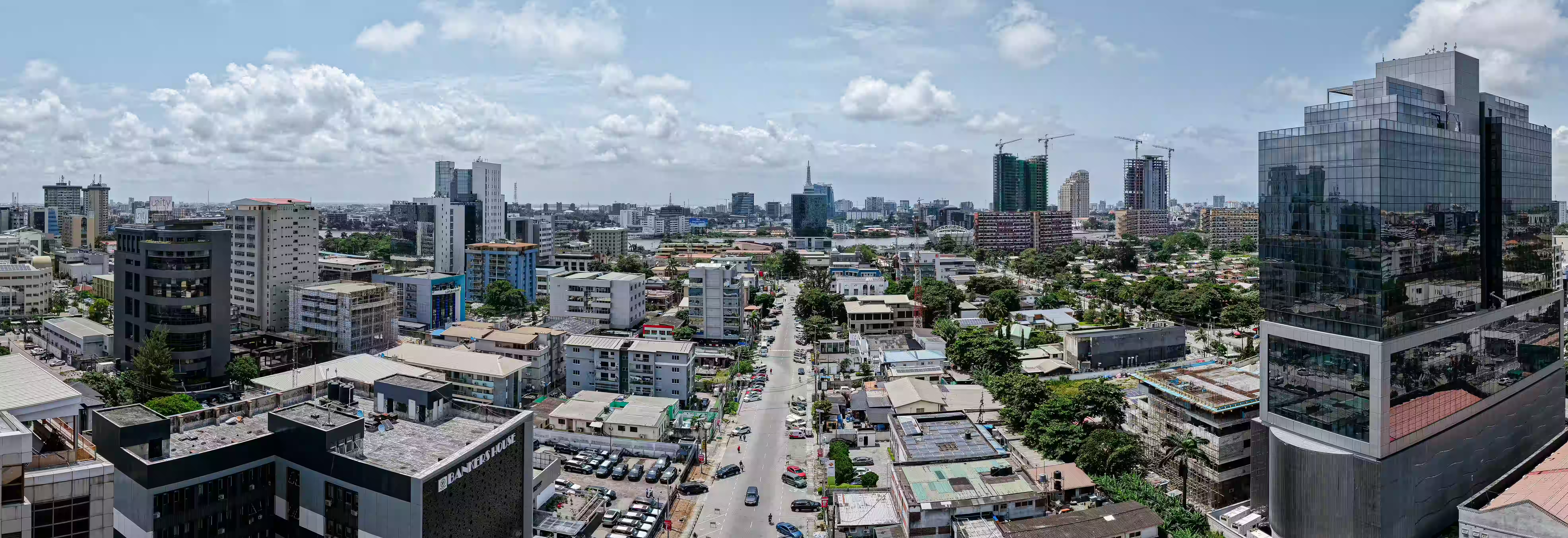
Look at where the market is heading and the pattern is clear. Yaba, once primarily a residential and education district, is now a mixed-use commercial corridor, attracting tech firms, co-working operators, and residential developers simultaneously. The Lekki axis is seeing retail, hospitality, and residential uses converge in a way that was not possible five years ago. Even older commercial corridors like Ikoyi and Victoria Island are seeing office buildings converted to residential and hospitality use as single-use commercial valuations come under pressure.
ONL's own pipeline reflects this shift. Project 190 on Herbert Macaulay Way integrates retail, office, lifestyle amenities, and a rooftop bar in a single eight-storey building. Project Montgomery combines office, commercial, residential, and hospitality. The University of Lagos sports development combines athletic facilities, retail, and community infrastructure. These are responses to what the market is asking for.
Mixed-use development is more complex to deliver than single-use. It requires earlier-stage planning discipline, more nuanced design briefs, and a project management approach that can hold multiple programmes and occupier requirements in tension simultaneously. Financing can be more complicated, approvals often require additional coordination, and the operational model post-completion is fundamentally different.
But the rewards, including lower vacancy risk, stronger long-term asset performance, and buildings that genuinely contribute to the urban fabric, justify the investment in capability. For developers who want to build assets that perform over decades rather than years, mixed-use is increasingly the most rational choice in Nigerian urban markets.
The question is not whether to pursue mixed-use. It is whether you have the right team to deliver it properly.


